Modern transitional is not a style you find in a catalog — it is a design position that requires constant calibration between two competing forces: the clean geometry and restraint of contemporary architecture, and the warmth, texture, and material depth of traditional construction. This St. Marlo home is a demonstration of what that balance looks like when it is resolved correctly.
Every architectural style requires a set of commitments. Full contemporary design commits to clean surfaces, minimal ornamentation, and a palette that prioritizes form over material warmth. Traditional design commits to historical references, decorative detail, and material choices that signal craftsmanship and age. Modern transitional commits to neither — and to both. It uses contemporary geometry as the structural skeleton and traditional material quality as the flesh, producing homes that feel of this moment without feeling cold, and timeless without feeling dated.
In practice, this means flat-front shaker cabinetry rather than raised-panel (contemporary geometry) in a natural marble countertop (traditional material quality). It means clean-lined metal balusters rather than turned wood spindles (contemporary) on a staircase with a generous run-to-rise ratio that feels unhurried and substantial (traditional). It means a geometric coffered ceiling (contemporary interpretation of a classical form) with warm LED illumination that produces the kind of glow a fireplace provides (traditional comfort). Every design decision in this home was made with both references in mind.
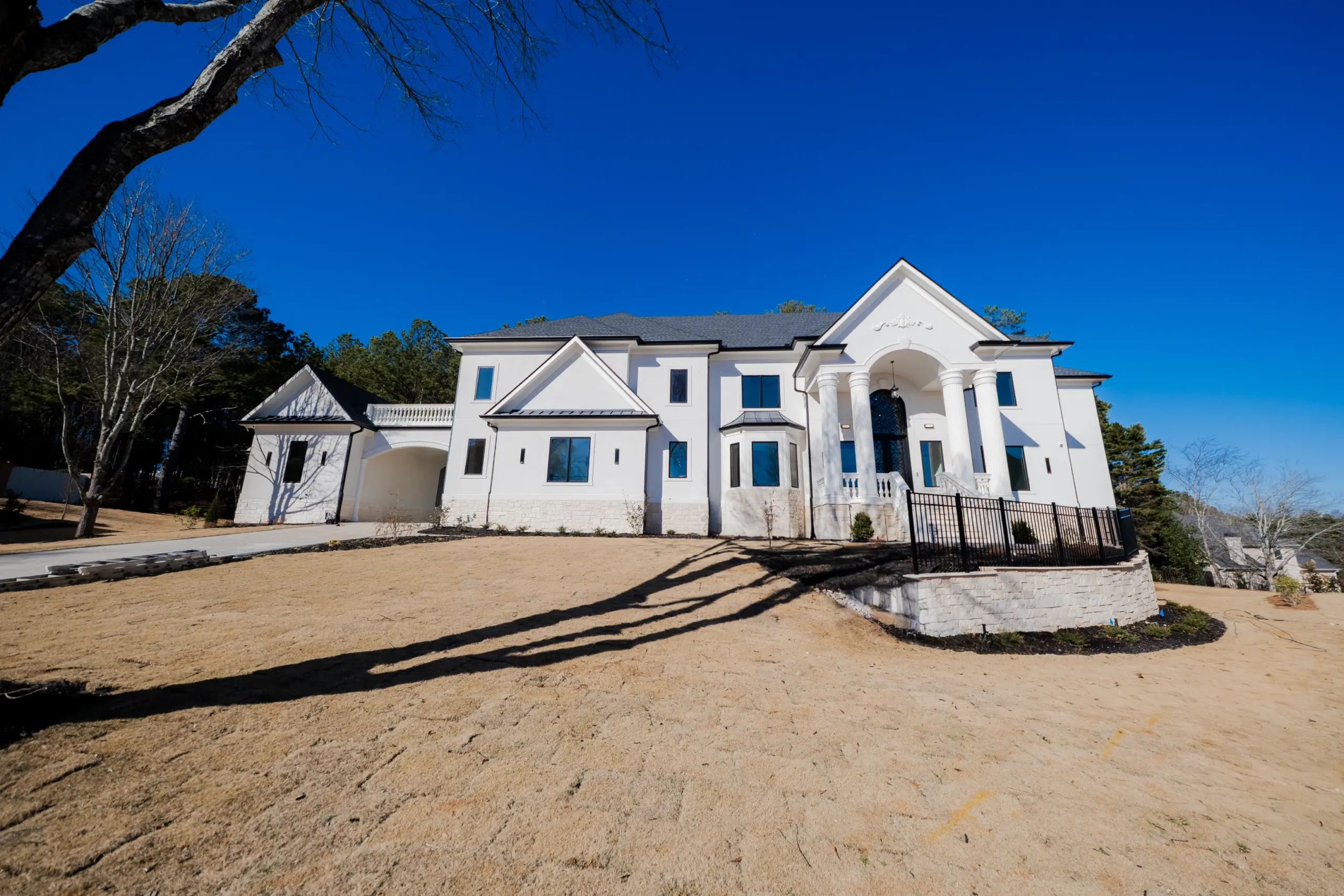
From the street, the modern transitional exterior reads as clean, confident, and contemporary. The white Hardie board siding and flat-planed facade surfaces signal contemporary sensibility. The multi-gabled roofline provides architectural depth and visual interest that a purely contemporary flat or shed roof would not. The arched entry portico introduces the single historical reference that anchors the facade in tradition — the arch has been the symbol of a significant entry since the Romans — while the surrounding facade is resolutely contemporary.
This combination — contemporary cladding, traditional roofline geometry, and a single historical entry element — is the exterior expression of modern transitional. Too many traditional elements would push the design into colonial or craftsman territory. Too few would produce a house that reads as cold and commercial from the street. The calibration is everything — and it is not something that can be achieved by making individual decisions one at a time rather than as part of a unified design philosophy.
“Modern transitional is the style for homeowners who want their home to feel current when they move in and timeless when their children grow up in it. It is a bet on quality and restraint over trend and novelty.”
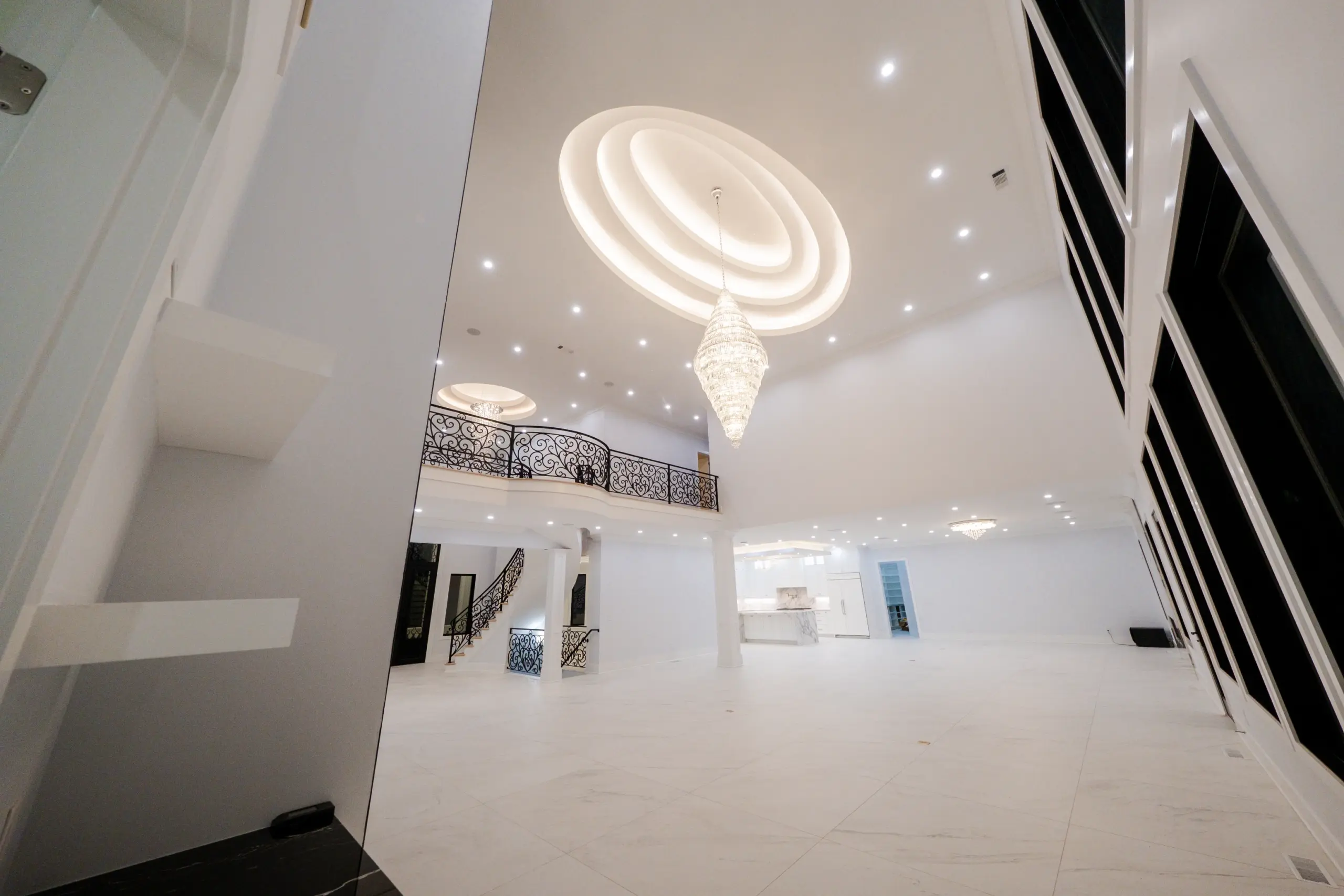
The foyer: contemporary volume and metalwork, traditional scale and material quality — modern transitional in its most powerful form
Inside this home, the modern transitional philosophy governs every finish decision. The kitchen cabinetry is shaker profile — the simplest traditional cabinet form, stripped of decorative complexity but retaining the inset frame that signals quality construction. The countertop is Calacatta marble — the most traditional luxury kitchen material available, predating every engineered alternative by centuries. Together, they produce a kitchen that reads as completely contemporary and completely timeless in the same moment.
The bathrooms apply the same logic: white subway tile (the simplest possible tile specification, in continuous use since 1904) combined with natural marble countertops and frameless glass enclosures (the most contemporary bathroom specification available). The herringbone shower pattern is a traditional laying technique applied to contemporary materials with contemporary precision. The coffered ceiling in the living room is a classical architectural element redrawn with contemporary geometry and integrated LED technology.
Will modern transitional design still feel current in ten years?
Yes — the elements that define modern transitional design are not trend-dependent. Natural marble, white cabinetry, clean metal accents, and contemporary geometric forms have appeared in residential design across multiple decades without feeling dated. The only risk comes from incorporating highly specific trend elements — a color moment, a fixture profile that reads as very particular to a single year — which is why we avoid them in favor of cleaner, more enduring specifications.
How do you determine where the balance falls between modern and traditional?
The balance is determined by the homeowner’s own instincts and confirmed through the design development process. We present exterior elevations and interior perspectives that show the design at multiple points along the modern-to-traditional spectrum and refine from there. The right balance is the one the homeowner recognizes as feeling like home — and our job is to give them the visual tools to identify it clearly before a single material is ordered.
Serving Gwinnett, Forsyth, Hall, Fulton, and Cherokee County homeowners within 30 miles of Duluth, GA.
Request a ConsultationAtlantic Construction & Remodeling — custom luxury home design and build serving the north Atlanta metro within a 30-mile radius of Duluth, GA.