

In Suwanee, Johns Creek, and the established neighborhoods surrounding Duluth, the homes that command the highest prices on appraisal — and sell fastest when the time comes — share one thing in common: their grounds look intentional from the moment you turn onto the street. Not manicured in an overdone way. Intentional. Like someone thought about every square foot of the exterior the same way they thought about the interior.
Most homeowners do the opposite. They build or renovate the home, run out of budget, and treat landscaping as the thing they’ll “get to later.” Later becomes never. The result is a property where the house is beautiful and the grounds undermine it. Atlantic Construction & Remodeling approaches landscaping as part of the complete exterior story — planned from the start, not patched in at the end.
The Duluth corridor and surrounding Gwinnett–North Fulton area sits in the Georgia Piedmont — red clay soil, rolling grades, and significant rainfall. This combination creates specific landscaping challenges that production landscapers routinely ignore until they become expensive problems. Drainage has to be solved at the design phase, not after the first hard rain reveals where the water pools. On elevated or sloped lots, this is not optional.
The landscape design on this build addresses exactly these realities. Curved paver walkways with proper cross-grade prevent water from tracking toward the foundation. Black mulch beds with defined edging solve the runoff problem elegantly while creating a high-contrast visual against the white brick. Specimen plantings were chosen for mature height and spread — so the landscape in year five looks intentional, not underfed.
“Landscaping designed around the house’s architecture raises the whole property. Landscaping treated as an afterthought tells you exactly what to expect on the inside.”
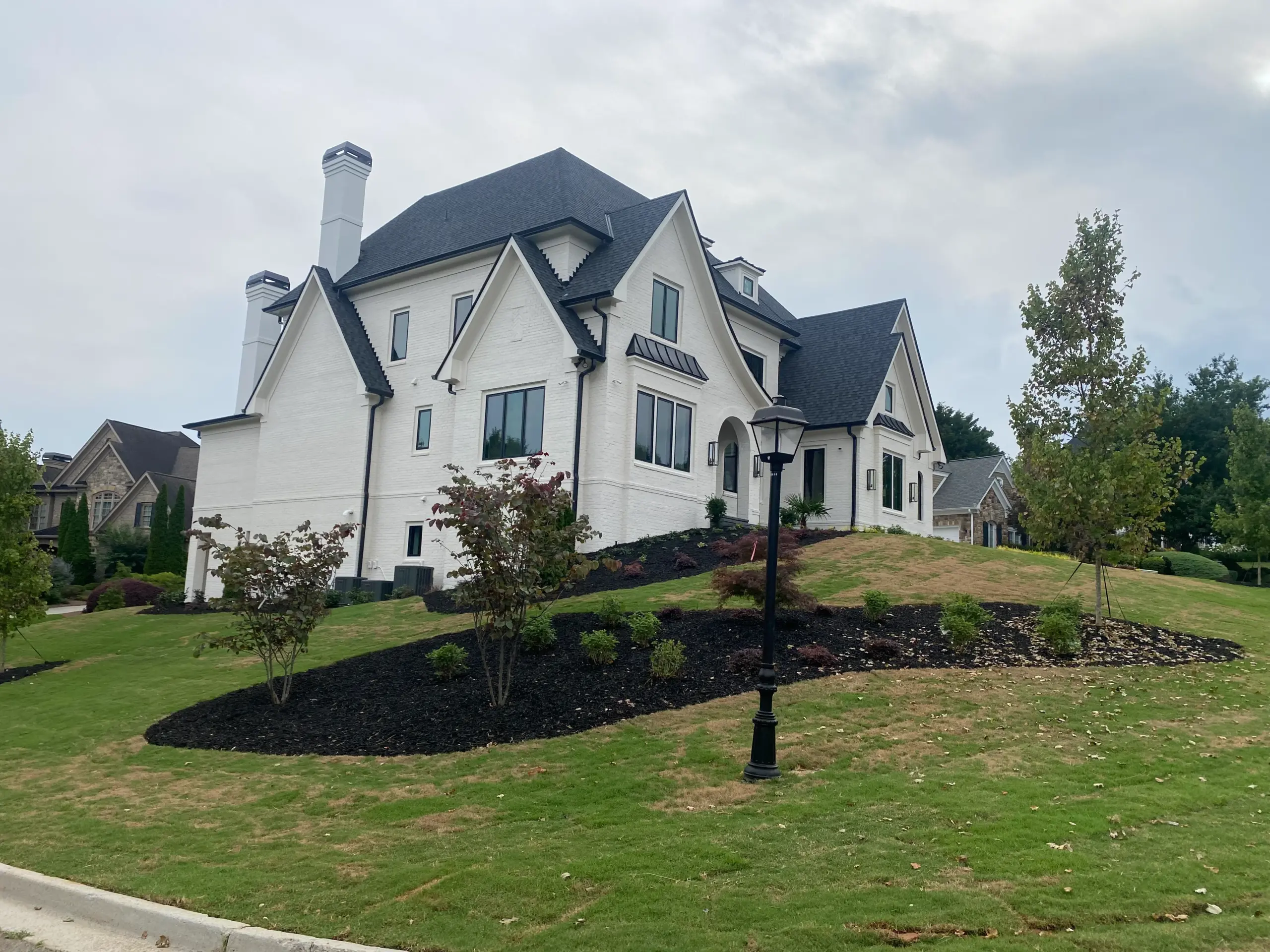
The rear lawn rolls gently from the home’s foundation to the property line — properly graded for drainage, framed by curved mulch beds and specimen trees placed for long-term impact.
The side paver walkway on this property does something most landscapers don’t bother with: it connects the front arrival sequence to the rear outdoor living space as a coherent journey. The curve of the path mirrors the curve of the planting bed beside it. The paver pattern matches the driveway material. The result is a cohesive property, not a house with a driveway bolted onto a yard.
The rear elevation shows what a properly sited, properly graded property looks like from the lawn. Twin chimneys, a balcony with black cable railing, and large windows all read clearly against the white brick because the landscape around them is clean and uncluttered. A cast-iron lamp post anchors the rear yard’s focal axis. Every element earns its place.
Landscape Elements That Drive Property Value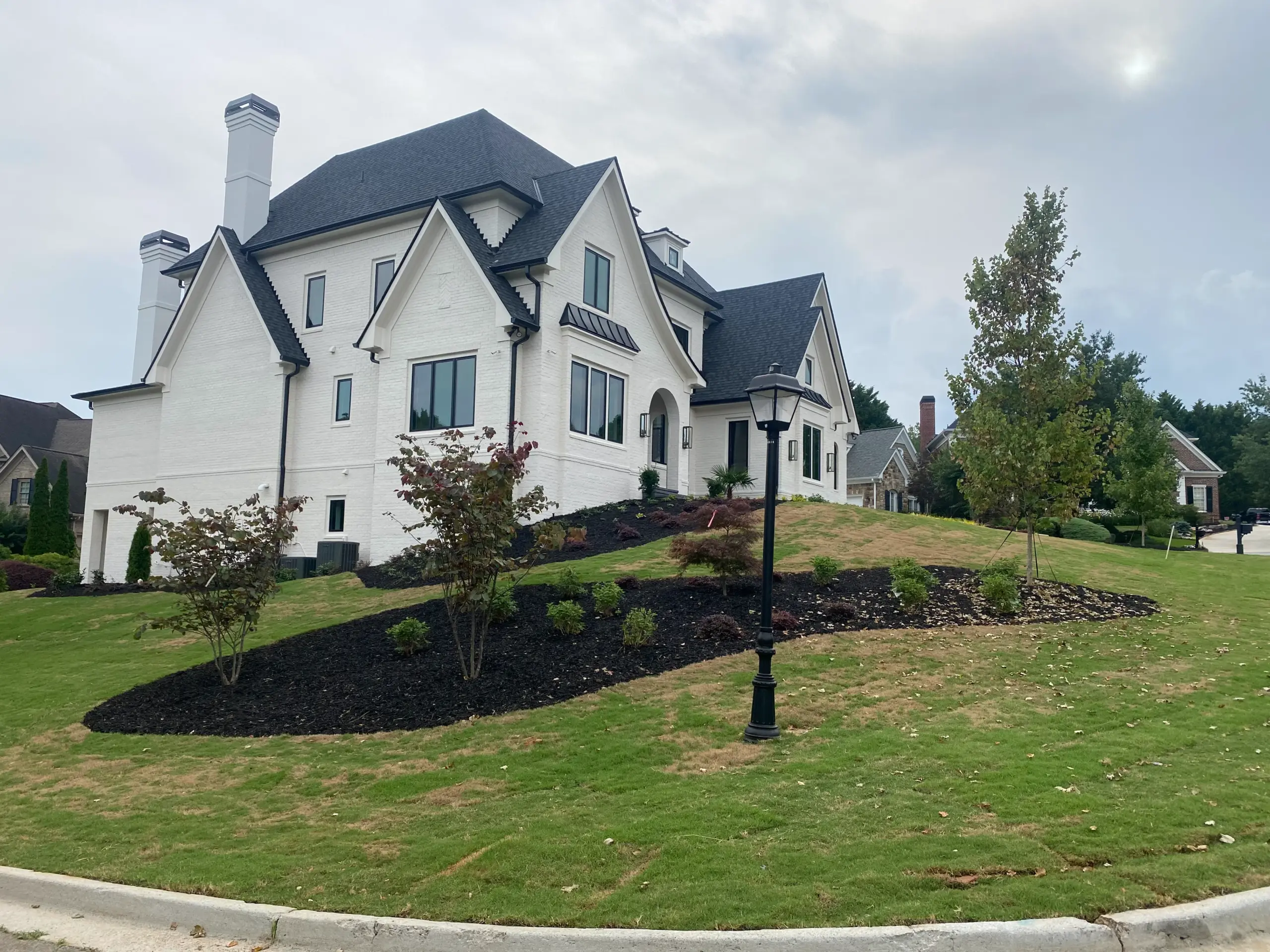
The rear exterior reads beautifully because the landscape was designed to frame it — not just planted around it.
For a luxury residential landscape in the Duluth–Suwanee–Johns Creek market — including grading, paver walkways, mulch beds, lawn establishment, and specimen plantings — expect a range of $18,000 to $65,000+ depending on lot size, existing grade conditions, and hardscape scope. Properties on significant slopes or with drainage complexity run toward the higher end. The investment is almost always recovered in appraisal value and dramatically shortened time-on-market when the property sells.
How does Georgia’s red clay affect landscape planning around Duluth?
Georgia red clay drains poorly and compacts under foot traffic and equipment. On most Gwinnett County lots, the builder’s grade addresses basic drainage requirements but not the nuanced surface runoff that affects planting beds and lawn areas. We typically amend soil in planting areas and establish positive grade away from all structures before any planting goes in. Skipping this step is why landscaping on new construction often looks struggling within two growing seasons.
What’s the right time of year to complete major landscape installation in the Atlanta area?
Fall is the best time for trees and shrubs — roots establish during winter before the heat stress of a Georgia summer. Lawn installation (sod or seed) works best spring through early summer. Hardscape and drainage work can happen year-round. If you’re targeting a spring completion, the design and grading conversation needs to start by October at the latest — our project calendar fills quickly heading into the spring install season.
Do I need permits for landscape work in Gwinnett County?
Most residential landscaping does not require permits in Gwinnett County. Exceptions include significant grading changes affecting adjacent properties, retaining walls over a certain height, and work in stream buffer zones. We identify any permit requirements during the site assessment and handle them as part of the project scope.
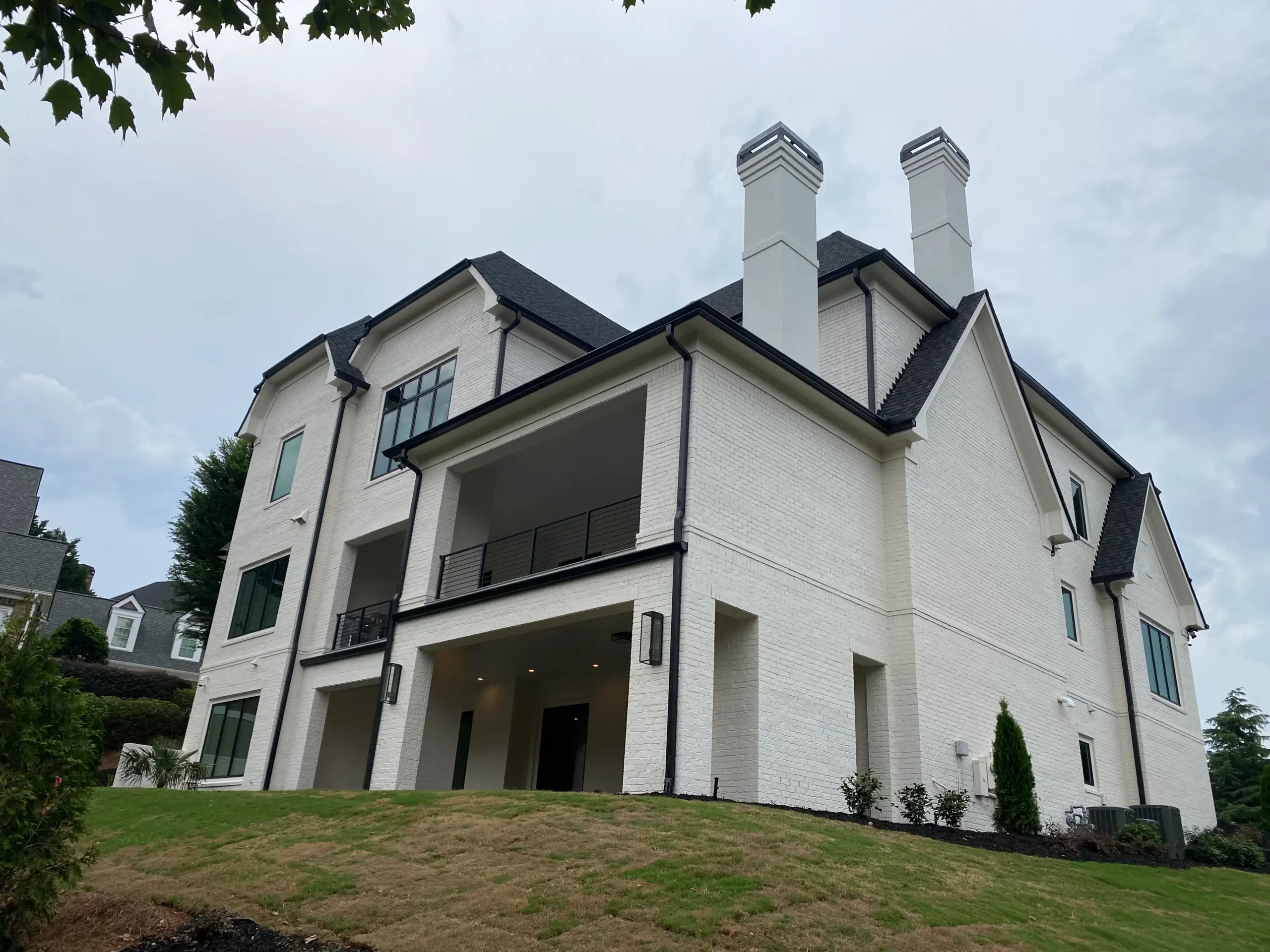
Every side of this property was designed with the same care as the front — because a well-built home deserves grounds that hold up to the view from any angle.
Atlantic Construction & Remodeling designs and builds landscapes that are planned from the start, graded correctly, and planted for long-term impact. Spring calendar spots are filling now.
Start the ConversationServing homeowners within 30 miles of Duluth, GA: