

A room with a flat ceiling and recessed lights is functional. A room with a tray ceiling and integrated cove lighting is an experience. The difference is not just visual — it is felt in the way the room makes you pause when you walk in, and in the way the quality of light wraps the space rather than simply illuminating it from above.
The tray ceiling with LED cove lighting is one of the most versatile and high-impact ceiling treatments available in luxury residential construction. Unlike a coffered ceiling that requires significant structural depth and ornate millwork, a tray ceiling can be executed in almost any room — bedrooms, home offices, exercise rooms, media rooms, dining rooms — at a range of investment levels. What does not change is the effect: a room that glows softly from its perimeter, creating a quality of light that no surface-mounted fixture can replicate.
On this custom estate, the tray ceiling with cove lighting was installed in the home fitness room — a space where the quality of light directly affects how long and how productively the room gets used. The double-stepped tray creates visual interest from below, the crown molding profile adds architectural weight, and the LED cove strip tucked into the upper reveal delivers a continuous, even wash of light that eliminates harsh shadows and transforms the room from a utilitarian gym into a space you genuinely want to spend time in.
A tray ceiling is created by stepping the ceiling inward from the perimeter walls — typically in one or two steps — so the center plane sits higher than the perimeter. The depth of the step, the width of the reveal, and the profile of the crown molding determine how the ceiling reads from the floor. A shallow single step with simple crown reads as clean and contemporary. A deeper double step with ornate profile reads as traditional and formal. Either approach can carry cove lighting.
The cove is the channel at the transition between the step and the ceiling plane — a recessed ledge that conceals the LED strip and directs its light upward and outward across the ceiling surface. Done correctly, the light source itself is never visible; only the soft gradient of illumination washing up the ceiling and back down the walls is seen. This indirect lighting effect is what makes a room feel dramatically different from a room lit by the same total lumen output of surface-mounted fixtures.
“A tray ceiling does not just change how a room looks — it changes how the room makes you feel the moment you walk through the door. That quality of light is why luxury hotels spend so much getting it right.”
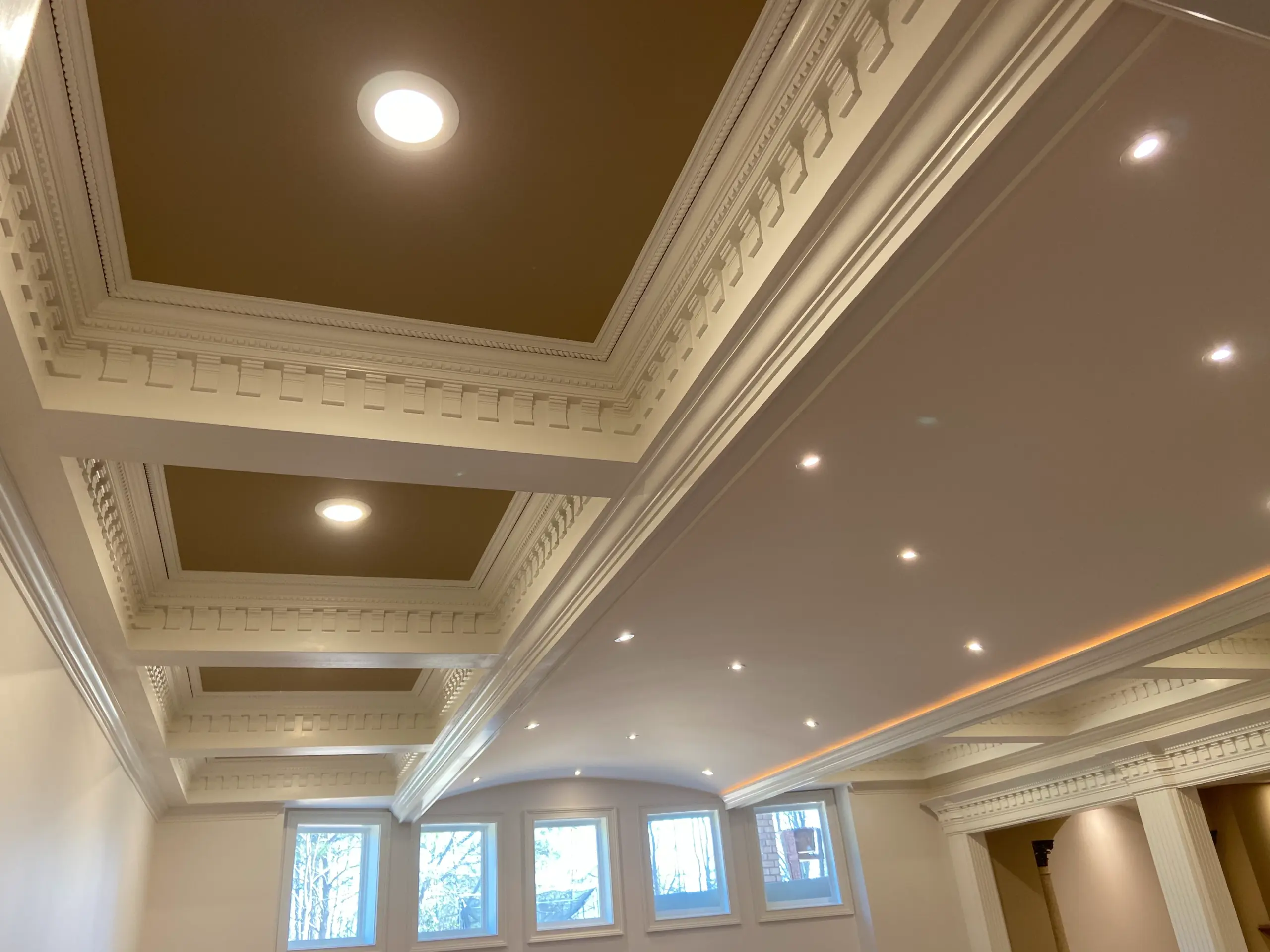
Grand coffered ceiling with integrated cove lighting and ornate dentil molding — luxury custom home, north Atlanta
Single-Step Tray with Simple Crown ($3,500 – $7,000 per room): Basic tray profile, standard crown molding, LED strip cove lighting with dimmer. Highest impact-to-cost ratio of any ceiling treatment.
Double-Step Tray with Ornate Profile ($7,000 – $16,000 per room): Two-step tray, decorative crown molding profile (dentil, egg-and-dart, or rope), high-CRI LED cove strip, dimmer integration. Shown in this home.
Coffered-Tray Hybrid ($16,000 – $38,000+ per room): Full coffered center with tray perimeter and cove lighting, ornate plaster molding profiles, integrated recessed lighting at each coffered panel, accent paint or gold leaf on inner planes.
Pricing varies by room size, ceiling height, molding complexity, and electrical scope. All estimates include framing, drywall, finish carpentry, and electrical rough-in.
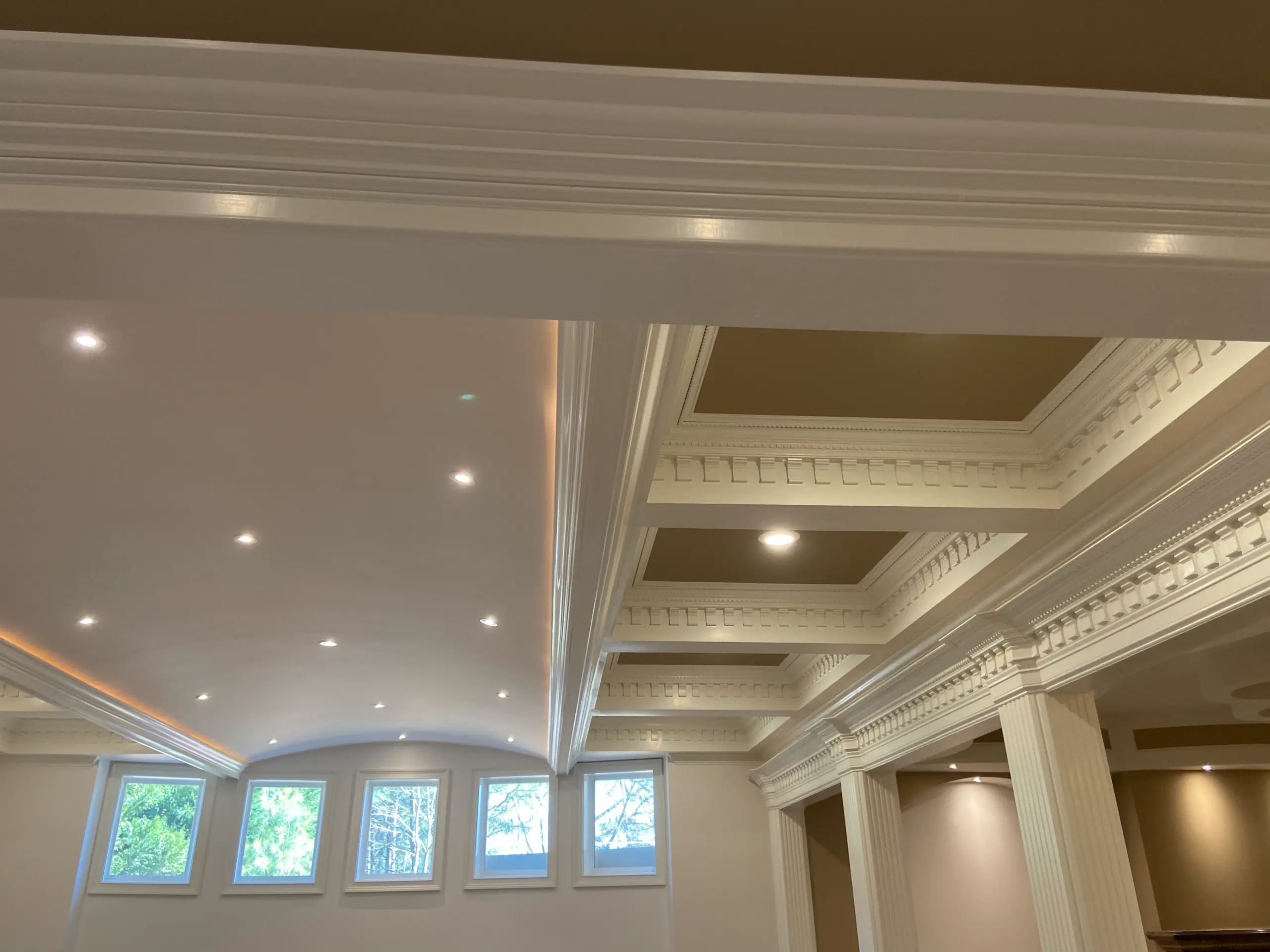
Ornate coffered ceiling — detailed molding profiles and warm LED cove illumination in a luxury custom home
Can a tray ceiling be added to an existing room?
Yes — it is one of the most common remodel ceiling upgrades we perform. We frame the tray down from the existing ceiling structure, run new electrical for the cove and any recessed lights, and finish with drywall and crown molding. The room is typically functional again within two to three weeks.
What color temperature LED should be used in a cove?
For residential spaces, 2700K to 3000K (warm white to soft white) is the standard recommendation. Warmer temperatures (2700K) create the most inviting, flattering glow. Cooler temperatures (3500K+) read as clinical and are best reserved for task spaces. We specify high-CRI LEDs (90+ CRI) in all our cove installations so colors in the room render accurately under the indirect light.
Does a tray ceiling require a permit?
The electrical work for cove lighting requires a permit in Gwinnett County and most surrounding jurisdictions. The structural framing typically does not unless it involves modifying load-bearing elements. We manage all permits and inspections as part of every project scope — you never need to interface with the permitting office directly.
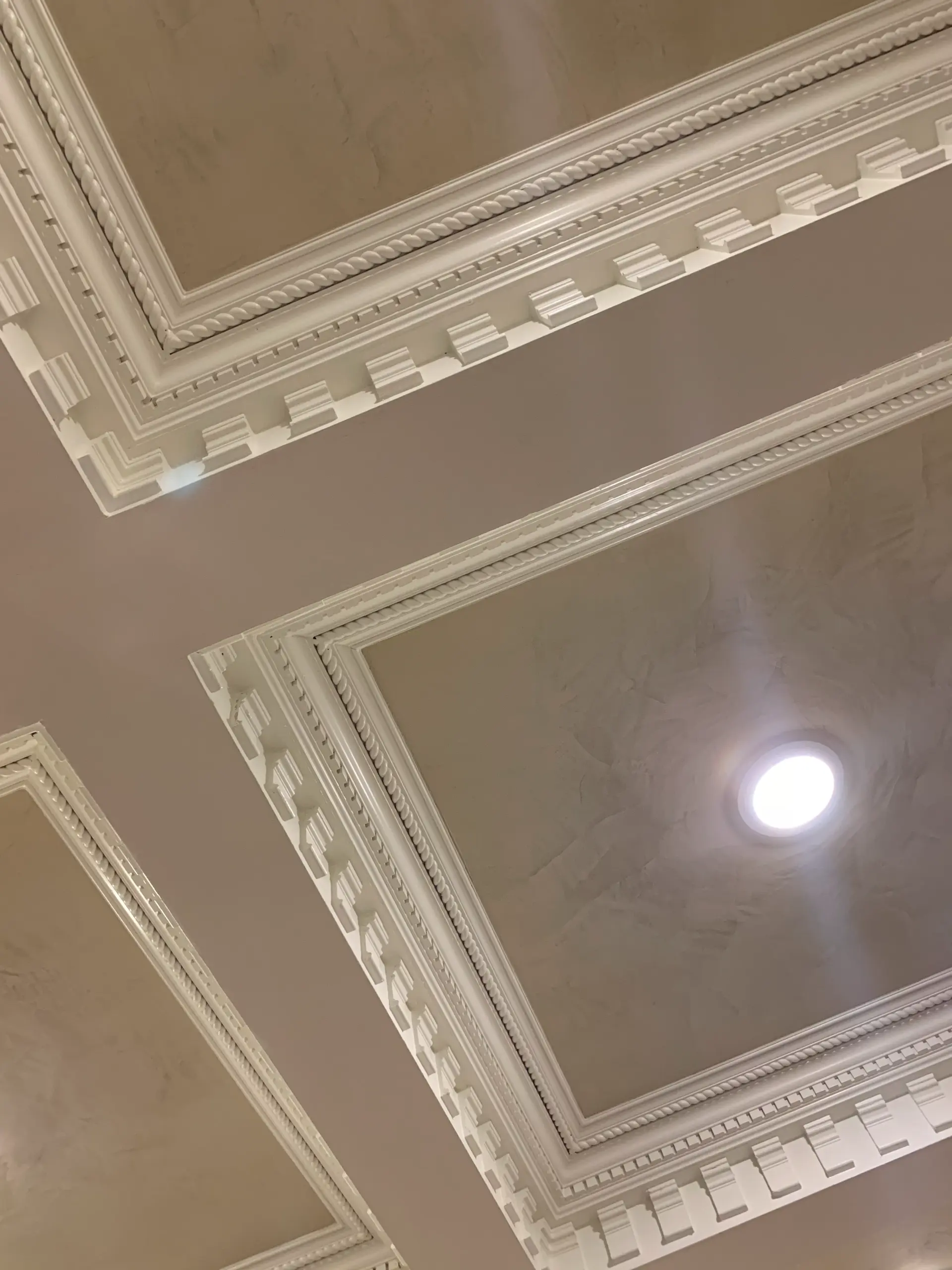
Serving Gwinnett, Forsyth, Hall, Fulton, and Cherokee County homeowners within 30 miles of Duluth, GA.
Request a ConsultationAtlantic Construction & Remodeling — custom ceiling design and build serving the north Atlanta metro within a 30-mile radius of Duluth, GA.