

In a custom home at this level, lighting is not a finish decision — it is an architectural decision. The chandeliers, the cove lighting, the recessed systems, and the backlit mirrors in this St. Marlo home were planned during design development, coordinated with the structural and electrical rough-in, and specified as part of the interior design rather than selected after the walls were closed.
Lighting design is the most underestimated element in residential construction. Most homeowners think about lighting at the fixture selection stage — choosing a chandelier from a showroom and specifying recessed cans in a grid pattern. This approach produces homes that are adequately lit but never beautifully lit. The homes that photograph well, that feel warm and inviting in the evening, that make every room look its best under every condition — those homes had their lighting planned as a design system, not as an afterthought.
In this St. Marlo build, every principal space has at least two independent lighting layers: a statement fixture or cove system that provides ambient illumination and defines the room’s character, and a supplementary recessed or task lighting system that provides functional illumination for specific activities. These layers are controlled independently, allowing the homeowner to dial in the exact mood and light level for any time of day or occasion.
The spiral chandelier in the two-story foyer is the most architecturally significant light fixture in the home. At this scale, a chandelier is not primarily a light source — it is a sculptural element that occupies and defines the vertical space of the entry. The light it produces is secondary to the visual presence it creates when the foyer is seen from the entry, from the mezzanine, or from the living areas adjacent to it.
The electrical rough-in for a two-story chandelier is fundamentally different from a standard ceiling mount. The structural support for the fixture weight, the wiring run from the ceiling box to the fixture body, and the chandelier drop length — all of these were engineered during design development and installed during the framing and rough-in phases. Adding a statement chandelier of this scale to an existing home that was not designed for it is an expensive and disruptive retrofit. Planning for it from the beginning is the correct approach.
“Lighting planned during design development costs the same as lighting planned at fixture selection. The result is completely different: one produces a home that is lit, the other produces a home that glows.”
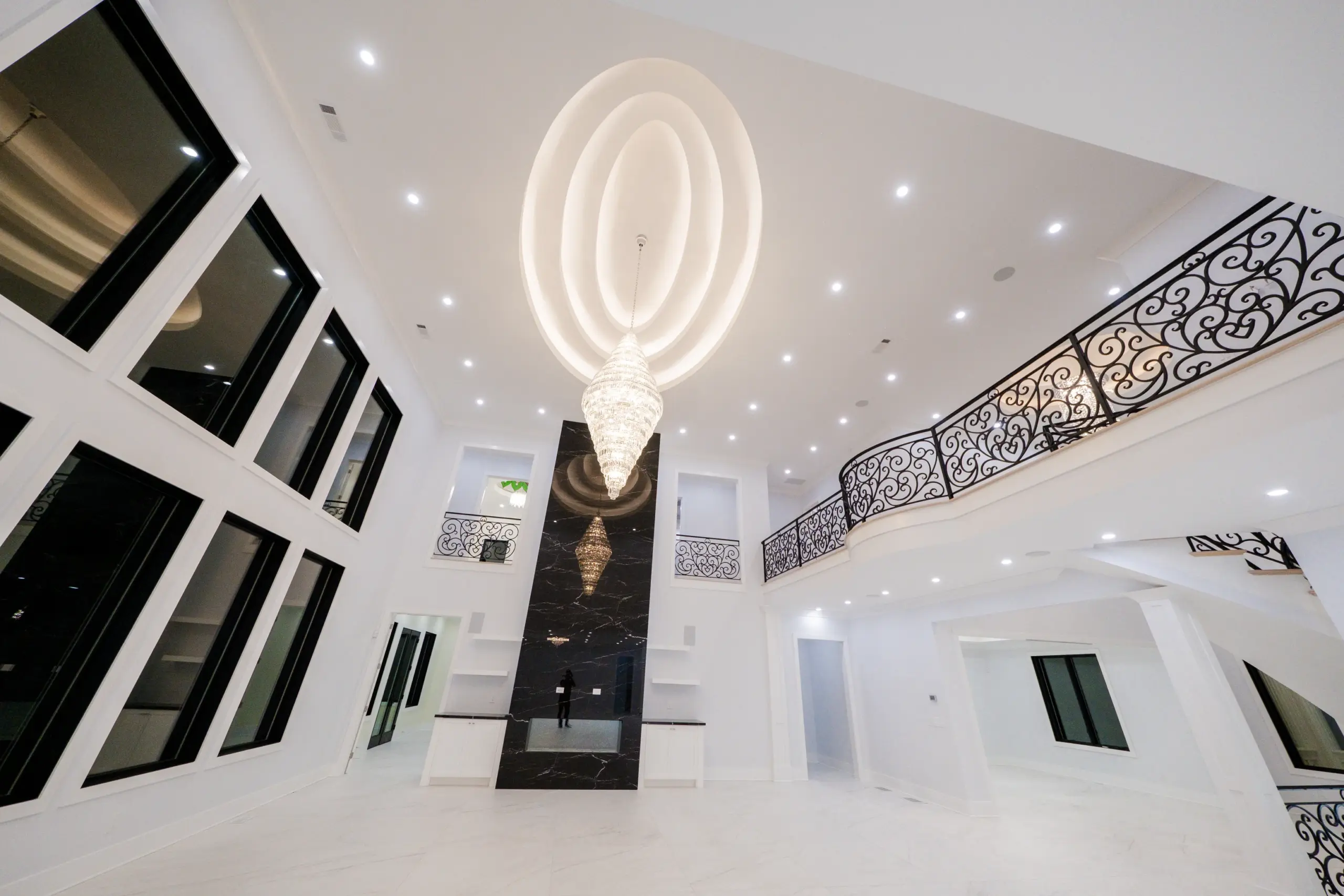
The foyer chandelier as a lighting element — illuminating the two-story volume and defining the entry character
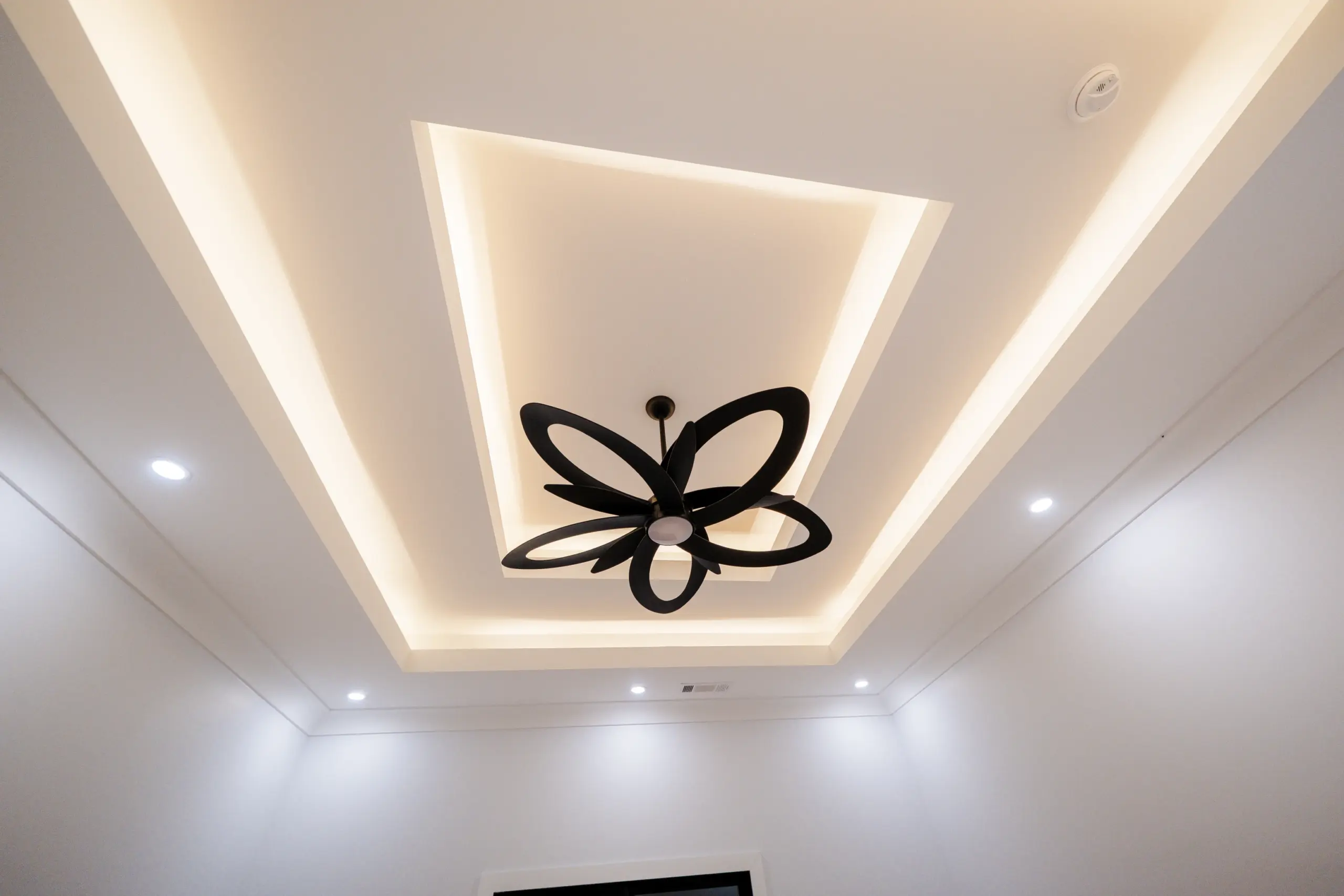
The coffered ceiling in the living area features integrated LED strip lighting inside the coffer channels — a cove lighting system that produces diffuse, ambient illumination from within the architectural geometry of the ceiling itself. Cove light is the most flattering and least obtrusive form of ambient lighting available in residential construction. The source is hidden, the light bounces off the ceiling surface before entering the room, and the effect is warmth without glare.
The LED strips in this home are tunable white — they can be adjusted from warm (2700K, close to candlelight) to cool (4000K, close to daylight) depending on the time of day and the desired mood. In the evening, the warm setting creates the atmosphere of a well-appointed restaurant. During the day, the cooler setting supports reading, working, and activities where clearer light is more useful. A single control system manages the temperature and brightness of every LED zone in the home.
How much does a whole-home lighting design add to a custom home build?
A comprehensive lighting design — including statement fixtures, cove lighting, backlit mirrors, and a smart dimmer system — typically adds $25,000 to $75,000 to the total build cost at this finish level. The majority of this cost is in the fixtures themselves rather than the electrical rough-in, which is relatively inexpensive to plan during construction and expensive to retrofit after the walls are closed.
Can smart lighting be added after a home is built?
Yes — smart dimmer switches can be retrofitted into existing switch locations with minimal disruption. However, cove lighting, in-ceiling speakers, and low-voltage wiring for smart home integration all require wall access and are significantly easier and less expensive to install during construction than to retrofit later.
Serving Gwinnett, Forsyth, Hall, Fulton, and Cherokee County homeowners within 30 miles of Duluth, GA.
Request a ConsultationAtlantic Construction & Remodeling — custom luxury home design and build serving the north Atlanta metro within a 30-mile radius of Duluth, GA.